

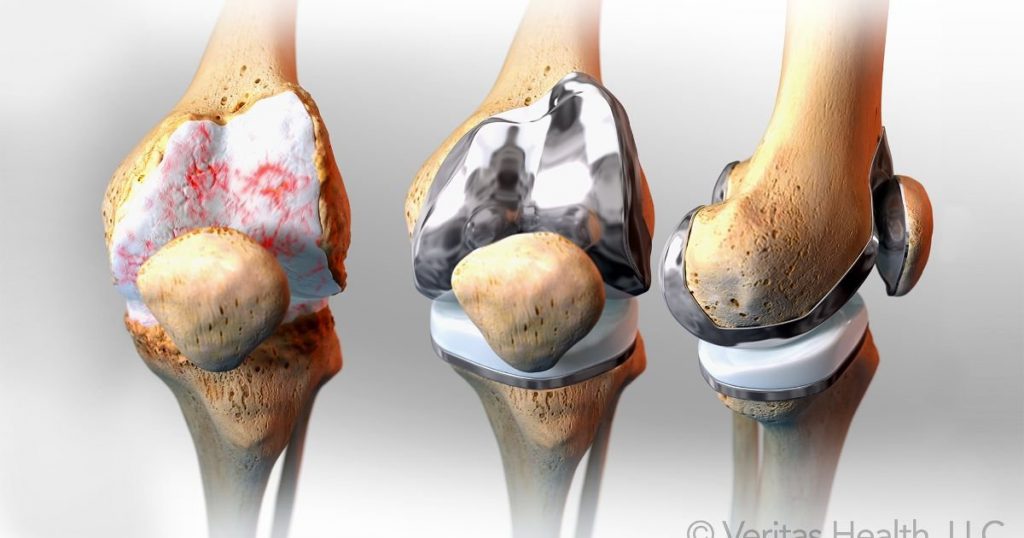
The global small joint reconstructive implants market reached a value of $7.4 billion in 2018 and is predicted to witness a 5.5% CAGR during 2019–2024 (forecast period). The major factors driving the growth of the market are the increasing prevalence of osteoporosis and arthritis and surging geriatric population. Small joint reconstructive implants, which are made up of metals and polymers, are used for small joints replacement surgeries, which involve replacing a destroyed joint with an artificial one. The surgery of small joints requires either replacement or fusion.
When type is taken into consideration, the small joint reconstructive implants market is divided into foot & ankle, staple fixation, hand & wrist, and other implants. ‘Others’ include shoulder reconstruction devices, external fixation devices, screws, and plates. Out of these, the hand & wrist category dominated the market during the historical period (2014–2018), holding a share of 44.2% in 2018. This is due to the growing number of sports injuries and rising geriatric population across the world. This category is further expected to experience the highest CAGR during the forecast period.
The small joint reconstructive implants market is bifurcated into ambulatory surgical centers (ASCs) and hospitals on segmenting by end-user. The hospitals bifurcation occupied the larger share of the market during the historical period and is expected to retain its position during the forecast period. The reasons for this are the greater footfall of people with joint-related issues and the growing number of osteo surgeries in hospitals. The category of ASCs is projected to grow at the higher CAGR of 5.6% during the forecast period.
To receive a free sample copy of this report:
https://www.psmarketresearch.com/market-analysis/small-joint-reconstructive-implants-market/report-sample
One of the major driving factors of the small joint reconstructive implants market is the surging geriatric population. In Germany, the geriatric population accounted for 20.9% of the total population in 2014, which rose to 21.4% in 2017. Similarly, other countries and regions are also experiencing a rise in the aging population. Since the elderly population is more prone to bone-associated disabilities, the demand for medical devices that aid in their management is high among this category.
Thus, with the increase in the geriatric population, incidence of arthritis, and prevalence of osteoporosis, the market is predicted to grow significantly.


