

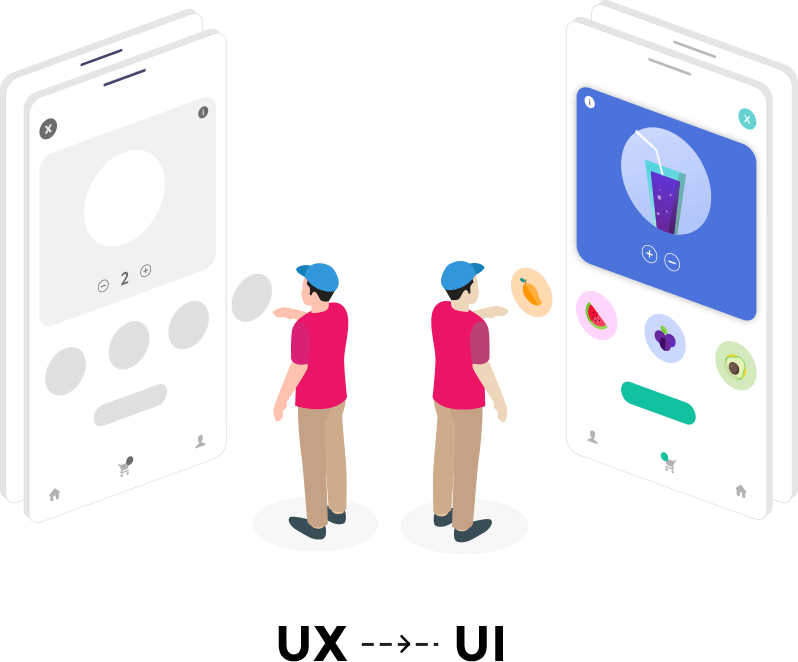
A UI designer creates a product from the point of view of the user. He must consider how users navigate the product and design it to be easy for them to use. In addition, UI designers must study the interaction design and the basic principles of design. They must carefully choose elements such as typography, menu styling, buttons, and icons. A UI designer must also consider the user’s preferences when it comes to the look and feel of the product.
UI UX Design
UI UX Design is a multifaceted and challenging design discipline. It is the process of translating the product development process into an intuitive user experience. The process of UI design takes into account all visual, interactive elements within the product’s interface. The goal of UI design is to guide the user through the product interface, providing a positive and easy-to-use experience. To better understand this field, consider these points. Here are some important considerations when working on UI design:
Wireframes are like a blueprint of the website or product. They provide a clear picture of the layout, functionality, and intended behaviors. Wireframe creators often solicit user feedback and incorporate it into future designs. Wireframes are crucial in the UI UX design process. Listed below are a few common UI UX design processes:
It’s the process of tailoring the experience for the user
The customer journey is tailor-made to the consumer’s specific needs and desires. Digital users behave differently than their traditional counterparts, moving through a jumble of devices, platforms, and communication channels to find their preferred contacts. In such a context, mapping the user journey alone is not enough. Tailoring stands out and attracts the user’s attention. Below are some examples of the benefits of customer journey mapping.
Tailoring is the process of creating communications based on specific information about an individual. Tailoring the experience for the user involves combining feedback about the user’s predispositions to take an action with information about the potential benefits and risks of the desired action. Tailoring the experience for a user increases the relevance of the information presented to them and helps achieve the desired change.
It’s related to information architecture
UI UX Design is closely related to information architecture, and both should be taken into consideration when designing a website or application. Generally, a well-designed information architecture is both predictable and user-friendly. Users who are unfamiliar with the site or application are likely to become confused if it doesn’t follow a predictable structure. A well-designed information architecture can help new players settle into a game without being overwhelmed by all the options.
Good information architecture is the foundation for a successful website. While the layout of your site or app is important, the information it contains should be arranged so that users can easily navigate through it. Information architecture should be structured so that the site will allow users to absorb information at a normal rate and should serve as a gateway to more detailed content. An example of this would be a recipe website, which can’t display full recipes on every page.
It’s focused on tangible elements
In contrast, user experience design is focused on the user’s experience, not on the product’s appearance. Unlike UI, where the focus is on the visual elements, UX design places emphasis on the journey, and feelings of the user. Both are critical to the success of any new product, but each focuses on different elements. Below are some key differences between UI and UX Design. Which one will your company choose?
While the two fields are closely related, they have separate roles. When it comes to product design, it’s important to remember that the UX design is focused on the user’s journey and solving the problem; whereas UI focuses on the tangible elements, such as the appearance and feel of a product. In terms of UI, however, it’s the design that looks good that counts. By combining both, you’ll have a product that everyone will enjoy!
It’s more cognitive science
UI UX Design is becoming more user-centered and cognitive science-based. The science of human thought is a key aspect of UI UX design, and Divami designers are applying these principles to their work. Cognitive science studies human perception, reaction time, and memory. It can be used to create better user experiences. Divami has already implemented these ideas into its designs. Learn how to incorporate these elements into your UI UX design and create a user-friendly experience for your customers.
The human brain is a complex, highly biased, and incomplete process. As such, studying human cognition can often lead to inaccurate conclusions, and even biases. Because human cognition is a complex process, it is impossible to study it in isolation. Instead, researchers can examine how human users respond to information by using eye-tracking cameras, skin sensors, and facial analysis. Using the latest technology, researchers can examine the subconscious behavior of users in order to better understand how people react to information.
It’s more visual
UI and UX are often confused with one another. However, the two fields are distinct, with UI dealing with the surface of the design, while UX deals with how users interact with the site’s components. Regardless of the differences between the two, both focus on the user experience, which includes the user’s experience with the product. A good UI design should reinforce a brand’s values and foster user trust.
While both terms are used interchangeably, UI Design focuses on making a design looks good. It focuses on making screens pleasing to the eye, while supporting the brand guidelines and overall direction. On the other hand, UX Design focuses on mapping out user journeys, pathways, and sequences to encourage conversions. While visual design focuses on aesthetics, UX Design also aims to make a product relevant and usable.


